Maintenance & Safety
Indiana storm season means power outages happen, and knowing how to manually operate your garage door — safely — is worth understanding before you actually need it in the dark during a storm.
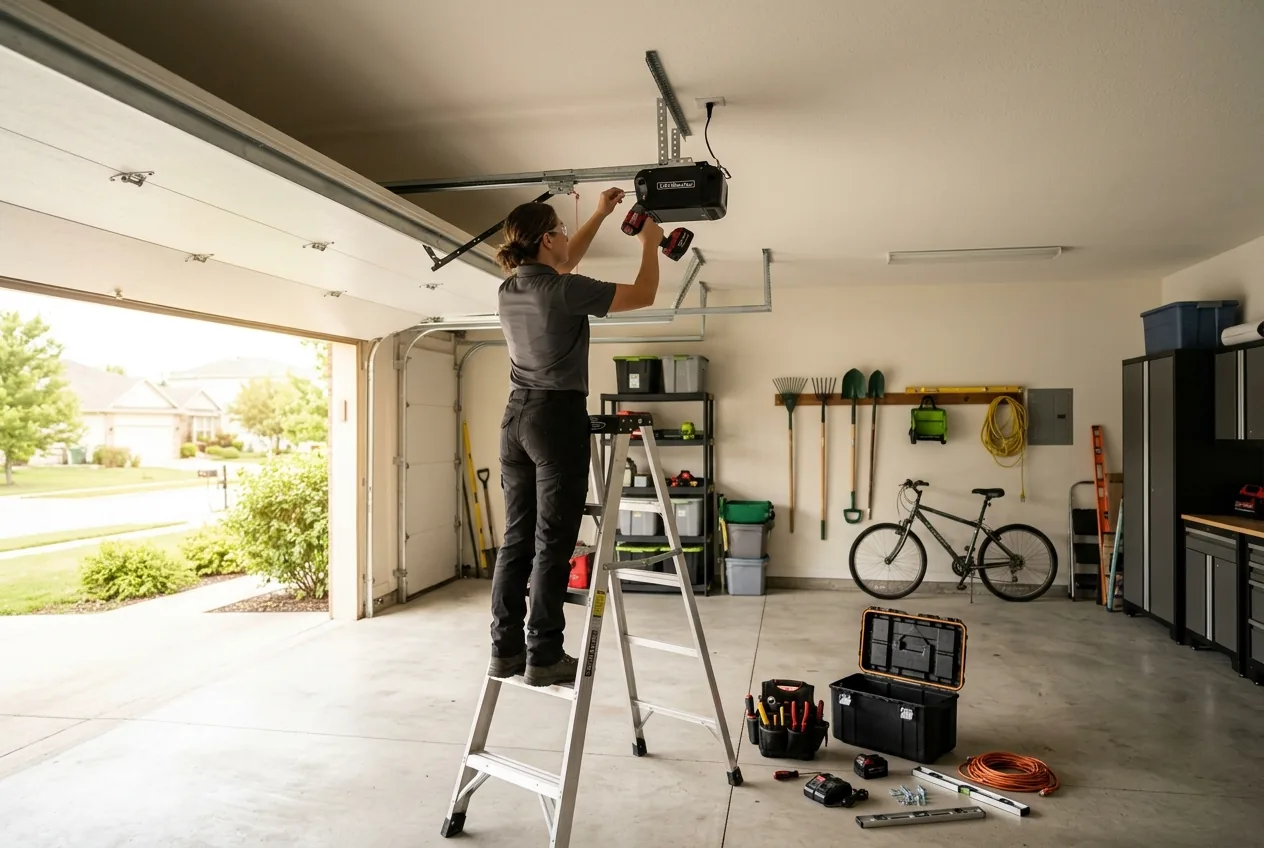
Look for a cord, usually red, hanging from the trolley that rides along the opener's rail, roughly where the rail connects to the arm attached to the top of the door. Pulling this cord disconnects the trolley from the drive mechanism, allowing the door to move independently of the opener.
Once power is back, close the door fully, then reconnect the trolley to the opener carriage (usually by pulling the release cord back toward the opener or following your specific model's reconnect procedure) and test with the wall button or remote to confirm normal operation has resumed.
A properly balanced door should feel manageable to lift by hand, moving relatively smoothly rather than feeling extremely heavy or fighting you. If it feels off, that's useful diagnostic information — it likely means your springs need attention, and it's worth having checked once power is back rather than continuing to strain the opener on a poorly balanced door.
If outages are a recurring concern in your area, many current opener models offer battery backup as a standard or add-on feature, which keeps the opener functioning normally through an outage without needing manual operation at all. Worth considering during your next opener installation or upgrade.
If you're going to be away from the house during an outage and can't monitor the garage, closing the door manually and using a slide lock (if your door has one) or manually locking the door adds a layer of security beyond just leaving it in the disconnected state.
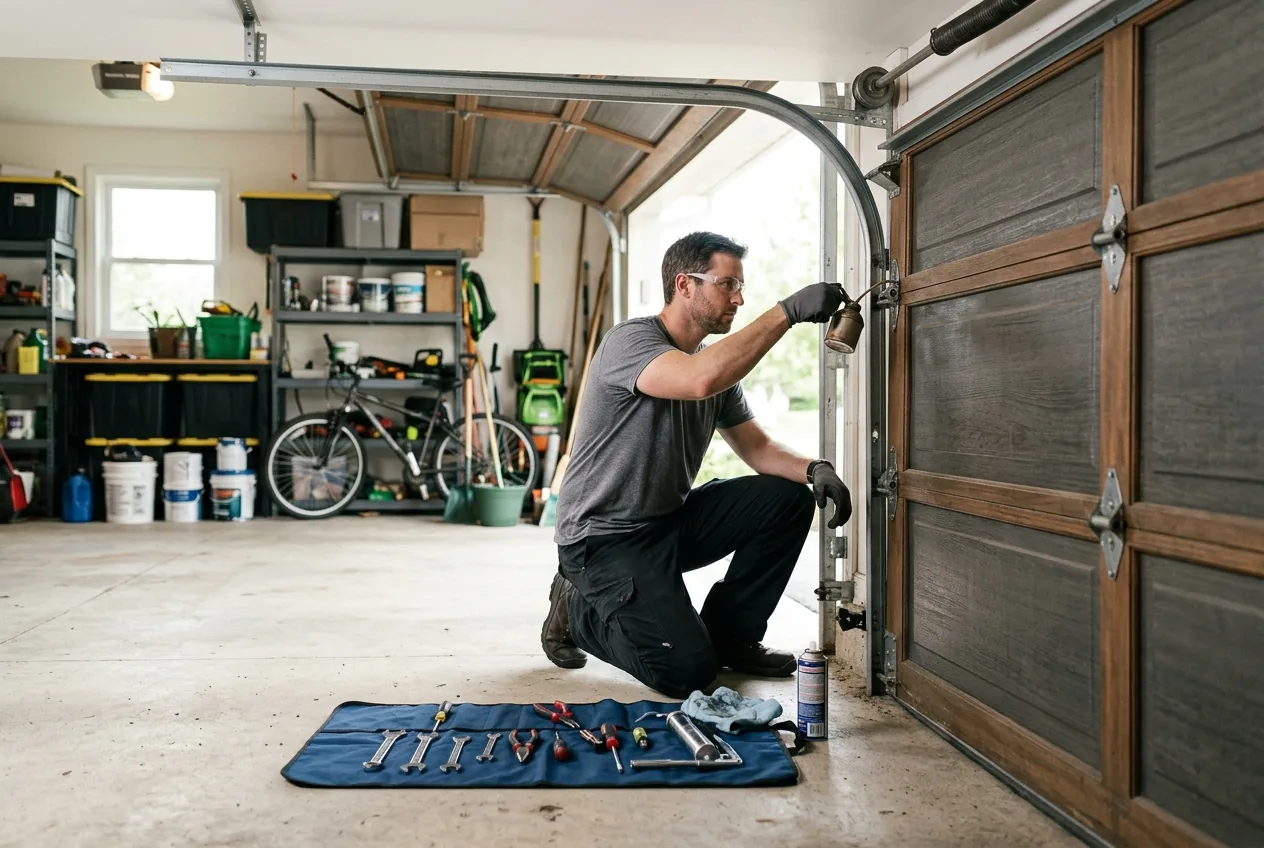
It's generally fine for a single use to get your car out during an outage, but if the door feels unusually heavy or doesn't hold its position, treat that as a sign to have the springs checked rather than continuing to use the door manually or automatically until it's inspected.
You can, but you'd lose the convenience and safety features (like the auto-reverse sensors) that the opener provides, so this isn't recommended as a long-term solution to an opener problem — better to have the opener actually repaired.
Test the door with the remote or wall button. If the opener moves but the door doesn't follow, the trolley likely isn't properly reconnected — check your opener's manual for the specific reconnect procedure for your model.
Tell us what's going on and we'll call you back to confirm a time. For anything urgent, call 317-509-9873 directly.
Call now for a straight answer and a real appointment window — or send us a quick request and we'll call you back.