Buying & Costs
Most homeowners never think about track type until a ceiling obstruction, a low garage header, or a specific opener choice forces the question. Here's what each configuration does and when it matters.
The most common configuration in residential garages. The door travels up vertically, then curves back and travels horizontally along the ceiling. This requires a reasonable amount of headroom — typically at least 10 to 12 inches of clearance above the door opening — for the curved section and the opener's mounting hardware.
Designed for garages where standard track won't fit due to a low header, ductwork, or other ceiling obstruction close to the top of the door opening. Low-headroom track uses a tighter, more compact curve to fit the door into a smaller vertical space. It typically requires specific low-headroom-compatible springs and sometimes a jackshaft-style opener mounted to the side rather than the ceiling.
Less common in typical residential settings, this configuration keeps the door traveling straight up further before curving back, useful in garages with unusually tall ceilings or specific commercial-style applications. Most single-family homes don't need this configuration, but it comes up occasionally in converted or custom spaces.
| Situation | Likely Track Type |
|---|---|
| Typical residential garage, adequate ceiling clearance | Standard track |
| Ductwork, low header, or beam close to the door opening | Low-headroom track |
| Converted space or unusually tall garage ceiling | Possibly vertical/high-lift, evaluated case by case |
If you're installing a new door or opener in a garage with limited headroom, this isn't a detail to skip — the wrong track configuration simply won't fit or won't clear obstructions correctly. It also affects opener choice, since not every opener mounting style works with every track configuration. We assess your specific garage's clearances during an installation estimate rather than assuming standard track will work.
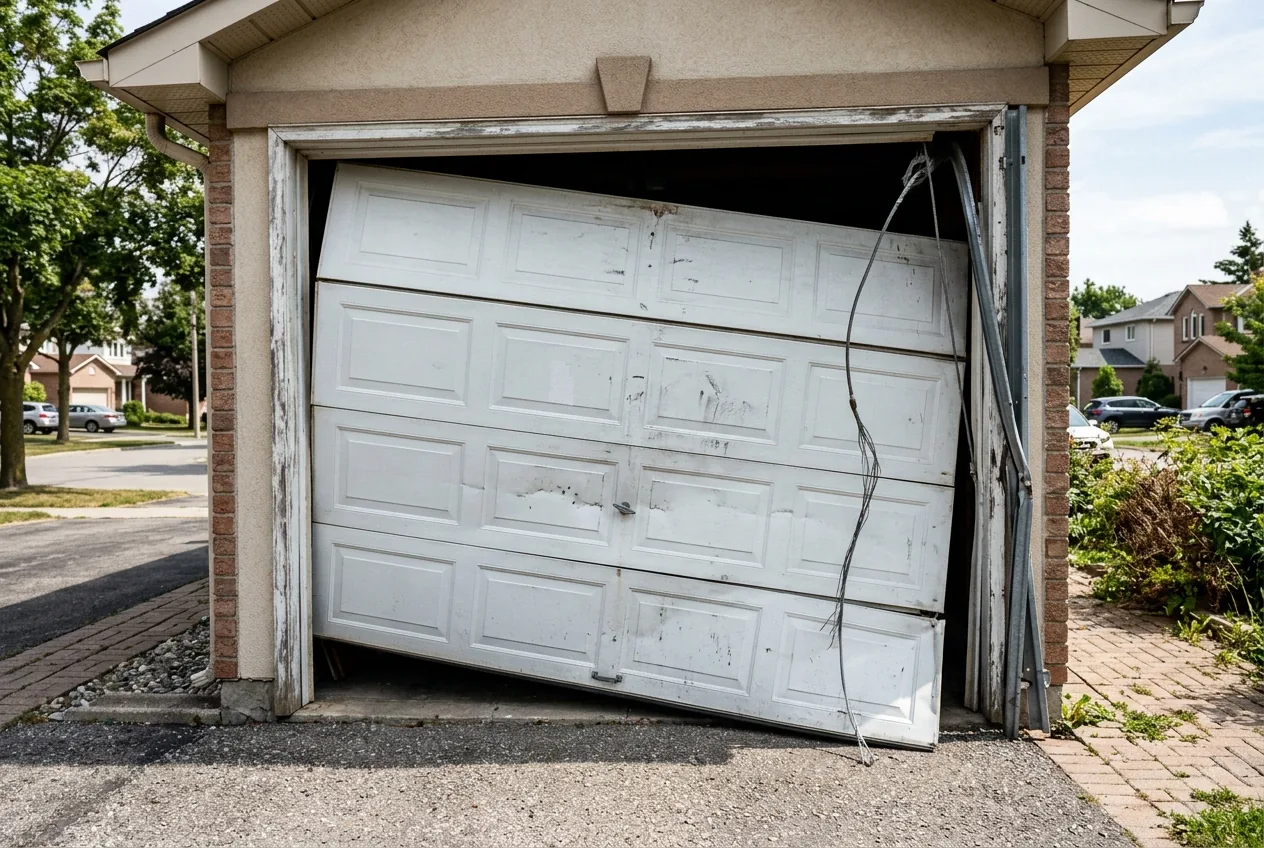
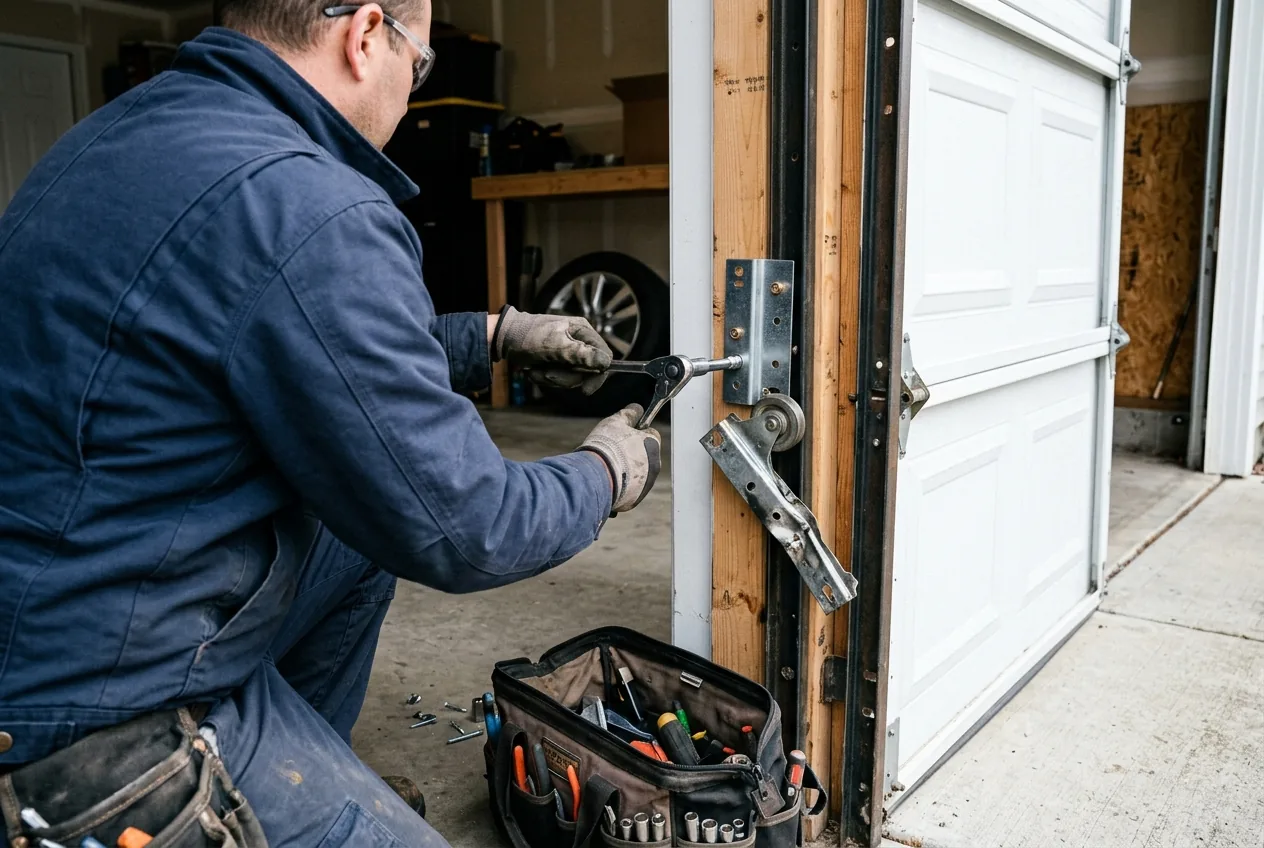
Whichever track configuration your garage uses, the same general repair principles apply — bent sections, loose brackets, and misalignment cause similar symptoms and need similar fixes. See our track repair page.
Measure the distance from the top of the door opening to the ceiling. Roughly 10 to 12 inches is a common rule-of-thumb minimum for standard track, though exact requirements vary by door and opener model — we confirm this during an estimate.
It's possible but involves replacing the track and typically the springs as well, so it's more practical to get this right during initial installation than to retrofit later.
Low-headroom and specialty track configurations can sometimes involve less common parts, which may affect cost and availability compared to standard track repairs.
Tell us what's going on and we'll call you back to confirm a time. For anything urgent, call 317-509-9873 directly.
Call now for a straight answer and a real appointment window — or send us a quick request and we'll call you back.