Repair & Troubleshooting
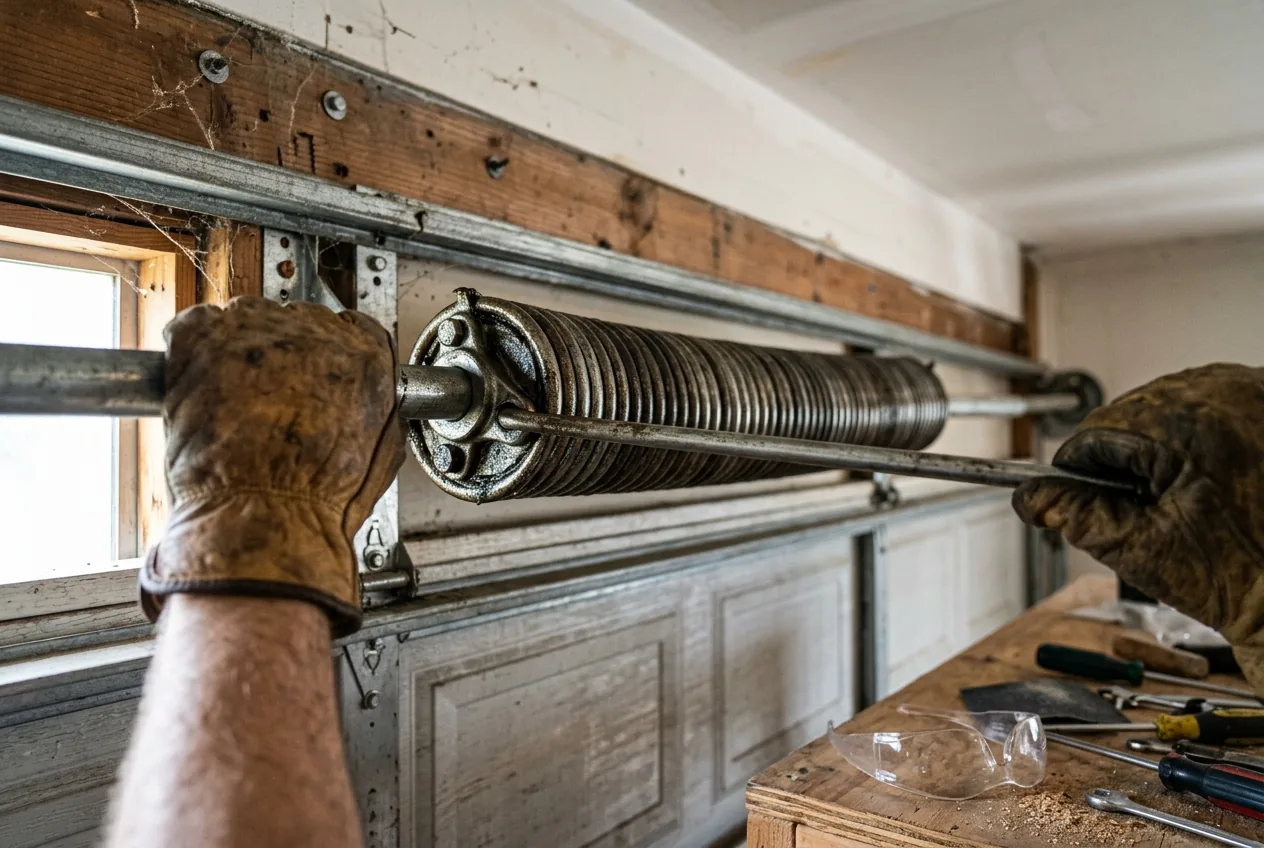
Torsion springs mount horizontally on a metal bar above the closed door and store energy by twisting; extension springs run along the horizontal tracks on either side and store energy by stretching. Torsion springs are generally considered more durable and safer when paired with containment cables, while extension springs are more common on older or budget installations.
A torsion system uses one or two springs wound around a metal shaft mounted above the door opening. As the door closes, cables wind the springs tighter, storing energy that helps lift the door back open. An extension system instead uses springs mounted along the upper horizontal tracks that stretch and contract as the door moves, using pulleys to transfer that force to the door.
| Factor | Torsion Springs | Extension Springs |
|---|---|---|
| Typical lifespan | Generally longer under equal use | Generally shorter under equal use |
| Balance & smoothness | More even lift, smoother operation | Can feel less balanced, especially as springs age |
| Space required | Needs headroom above the door for the mounting bar | Runs along existing horizontal tracks, less headroom needed |
| Safety with failure | Safer when paired with a center bearing and cables | Should always be paired with safety containment cables |
| Common on | Most modern residential installations | Older homes, budget installations, low-headroom garages |
Look above your closed garage door. If you see a single metal bar with one or two tightly wound springs running horizontally, that's a torsion system. If instead you see long springs running along the upper tracks on each side of the door, roughly parallel to the ceiling, that's an extension system.
Extension springs in particular should always have a safety cable running through the center of the spring. If a stretched extension spring fails without a containment cable, it can become a projectile. If you have an older extension spring system and you're not sure whether containment cables are installed, that's worth having checked.
For new installations and most replacements, torsion springs are the more common recommendation today because of their durability and smoother operation, though extension systems remain a reasonable choice in garages with limited headroom above the door. We'll assess your specific garage during an installation estimate and recommend what actually fits.
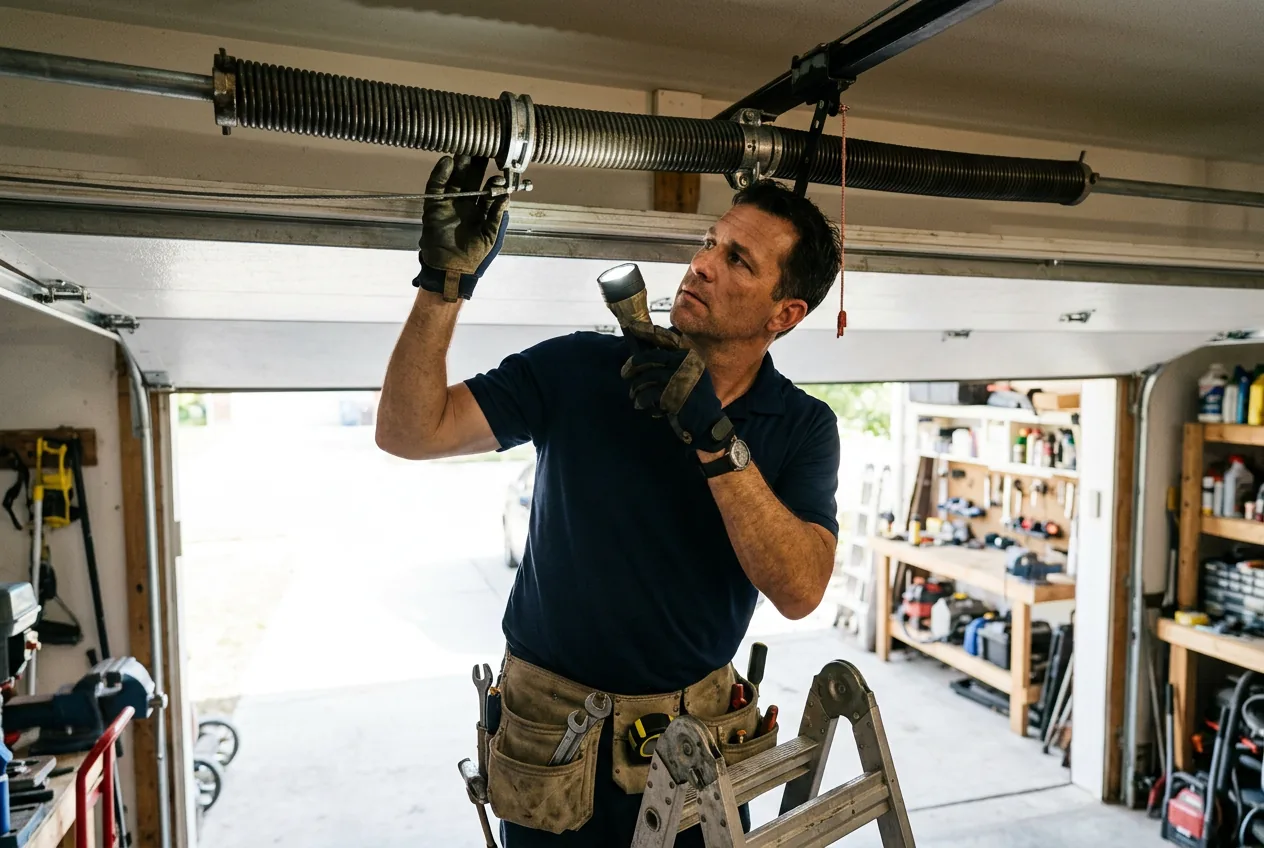
In most cases yes, if there's enough headroom above the door opening for the torsion bar. It's a bigger job than a standard spring replacement but a reasonable upgrade during a larger repair or door replacement.
Torsion spring replacement is often somewhat higher in upfront cost, but the difference is usually modest compared to the overall value of longer service life and smoother operation.
Yes — both store significant energy under tension and neither should be replaced or adjusted without the right tools and training.
Tell us what's going on and we'll call you back to confirm a time. For anything urgent, call 317-509-9873 directly.
Call now for a straight answer and a real appointment window — or send us a quick request and we'll call you back.