Repair & Troubleshooting
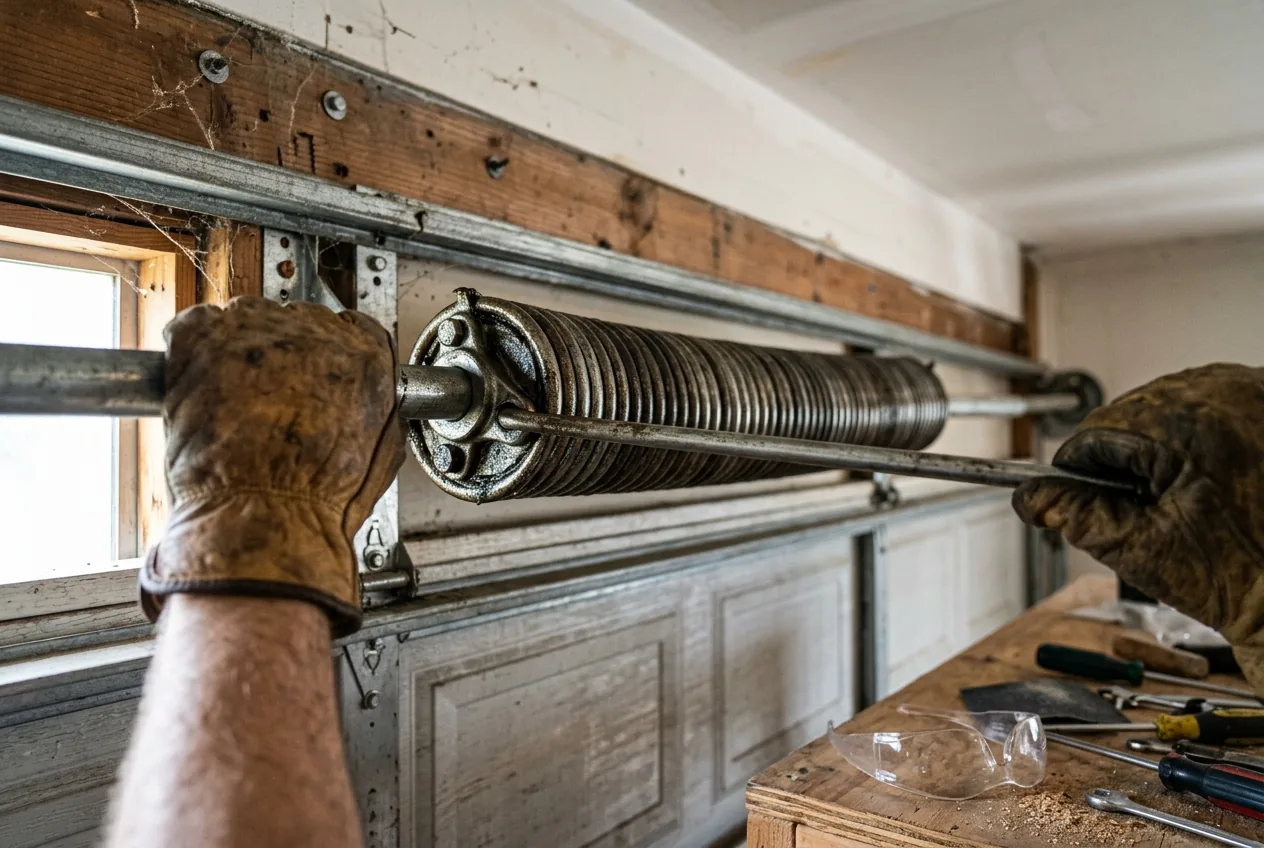
Most residential garage door springs are rated for somewhere between 10,000 and 20,000 open-close cycles. For an average household opening the door two to four times a day, that works out to roughly 7 to 12 years — but the honest answer is that springs fail by cycle count, not by calendar age, so a heavily used door can wear out much sooner.
A "cycle" is one full open-and-close movement of the door. Standard-duty torsion springs are typically rated for around 10,000 cycles, while higher-cycle springs are rated for 20,000, 25,000, or more. If your household opens the garage door four times a day — two cars, twice each — that's roughly 1,460 cycles a year. At that pace, a 10,000-cycle spring runs out in under 7 years, while a 20,000-cycle spring can last closer to 14.
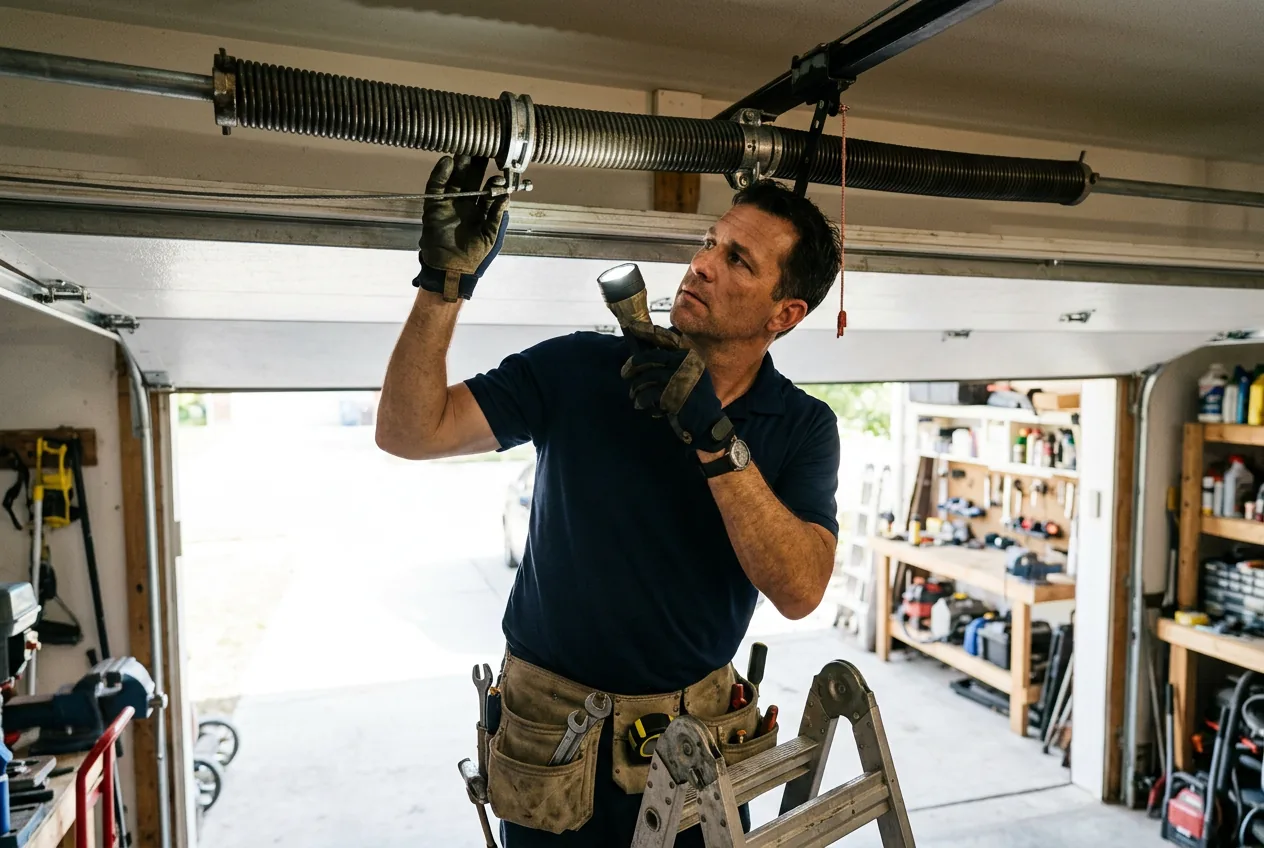
Springs rarely give clean advance warning, but a door that's started opening more slowly, an opener that sounds like it's working harder than it used to, or a visible gap forming in the coil are all reasons to have it inspected before it breaks rather than after.
If your door uses two torsion springs (most double-wide doors do), they were installed at the same time and have seen the same number of cycles. When one fails, the second is usually not far behind, which is why replacing both at once is the standard recommendation — it avoids paying for a second service call a few months later.
Regular lubrication of the coils (with a product actually rated for springs, not general-purpose oil), keeping the door properly balanced, and avoiding unnecessary cycles all help. But there's no way to "reset" a spring's cycle count — once it's near its rated life, replacement is the only real fix. See our maintenance guide for what you can safely check yourself.
Sometimes, especially on lightly used doors with good maintenance, but it's not something to count on. Treat the rated cycle count as a planning number, not a guarantee.
There's no built-in counter, so it's really an estimate based on age and typical daily use. A technician can assess wear signs during an inspection even without an exact cycle count.
Generally no — spring failure from normal wear is considered routine maintenance, not a covered peril. Insurance typically only applies if the damage came from a specific covered event like a storm or fire.
Tell us what's going on and we'll call you back to confirm a time. For anything urgent, call 317-509-9873 directly.
Call now for a straight answer and a real appointment window — or send us a quick request and we'll call you back.