Maintenance & Safety
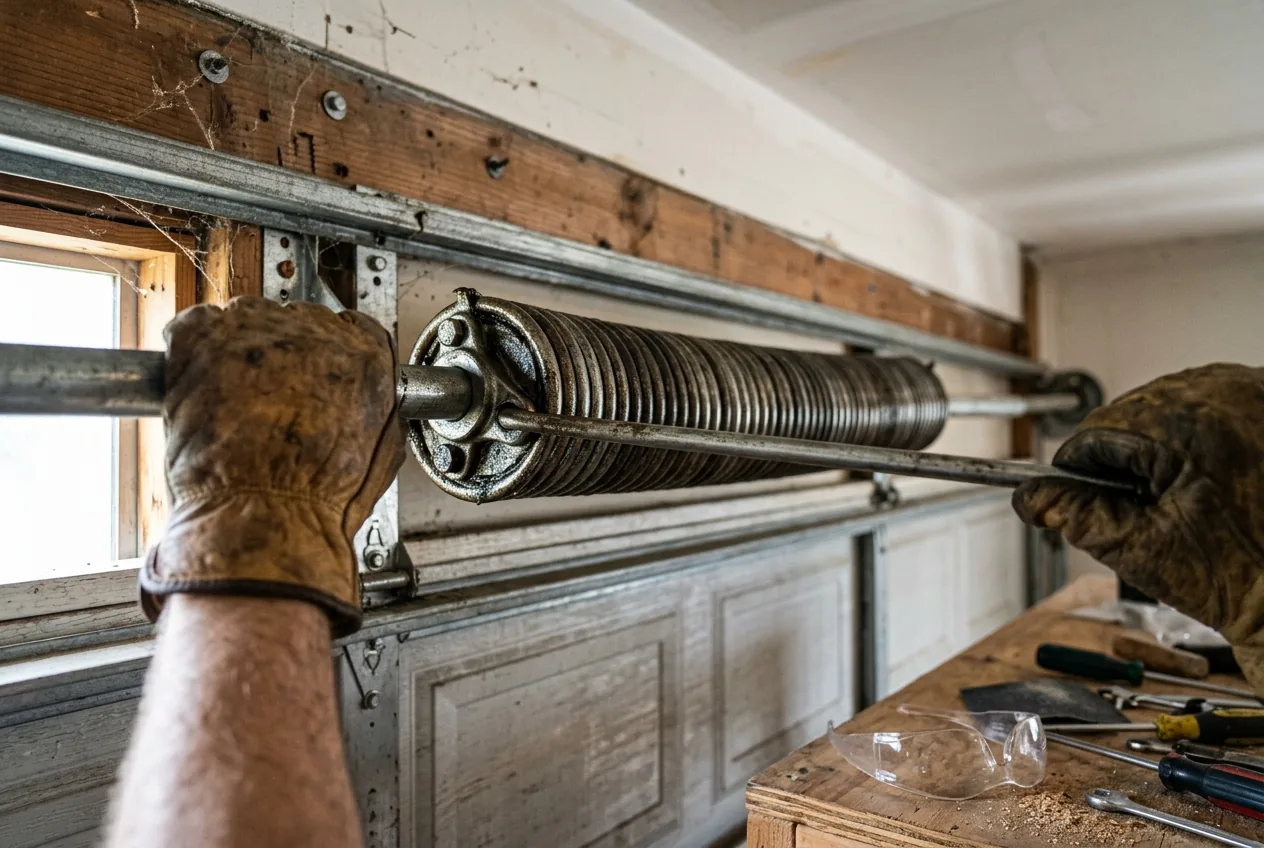
It can feel like a spring "just broke" out of nowhere, but the real explanation is almost always cumulative wear reaching its end point on what looked like a completely ordinary day. Understanding why helps explain why there's rarely useful advance warning — and why this is never a repair to attempt yourself.
Garage door springs are engineered and rated for a specific number of open-close cycles — typically in the 10,000 to 20,000 range. Every cycle flexes the metal slightly, and like any metal component subjected to repeated stress, the material gradually fatigues at a microscopic level until it eventually fails. This is the same basic physics behind a paperclip breaking after enough bends back and forth — it's not any single bend that breaks it, it's the cumulative stress.
Because the failure point is a cumulative threshold rather than a specific triggering event, the spring can fail on what looks like a completely ordinary cycle — no unusual noise, no obvious struggle beforehand, just a loud bang and then the door won't move. This is genuinely different from something like a cable, which usually shows visible fraying before it fails.
A torsion spring under full tension stores enough energy to cause serious injury if it releases uncontrolled, and even a spring that has already broken can still have residual tension in the system, including in the second spring on a two-spring setup. This is genuinely one of the more dangerous DIY repairs in home maintenance, which is why we don't provide winding or replacement instructions on this site — see our broken spring repair page instead.
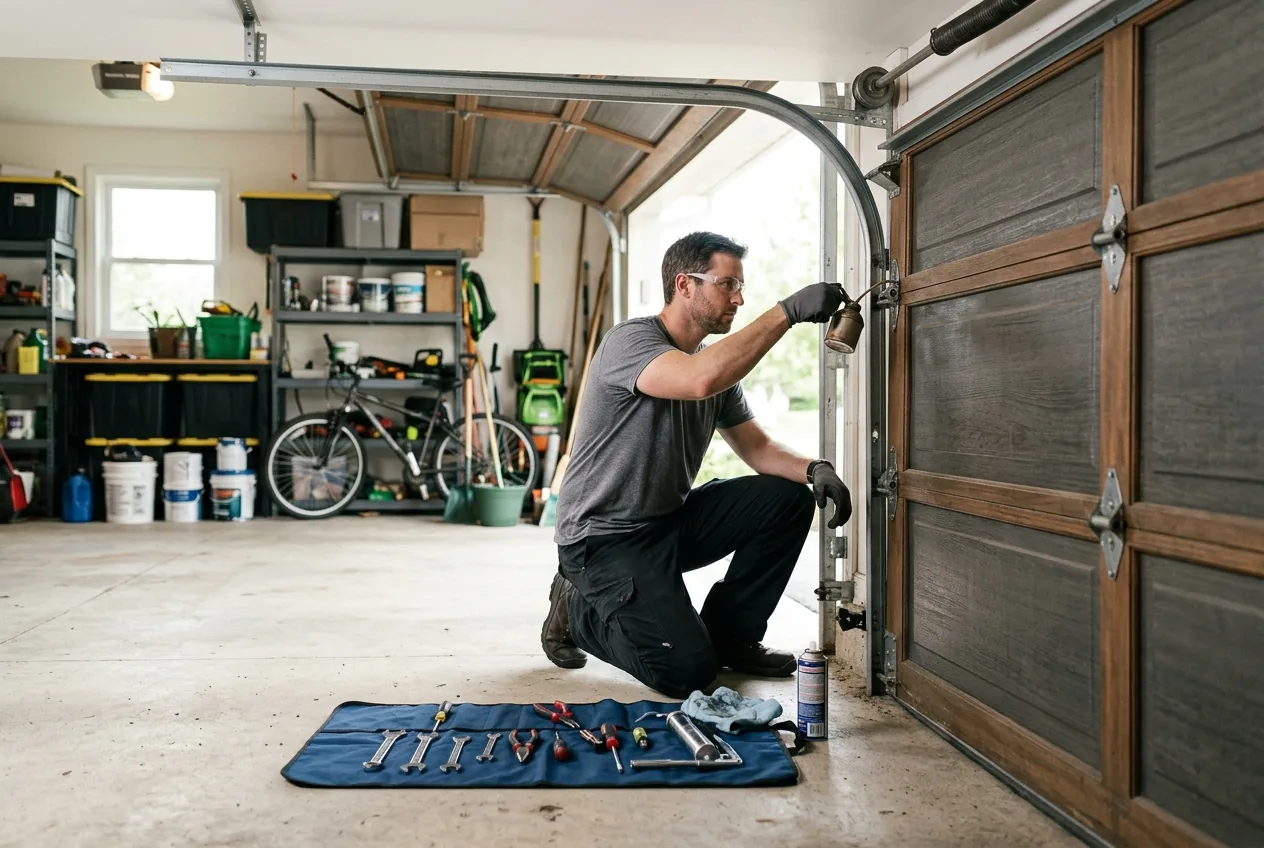
You can't extend a spring past its rated cycle life, but regular lubrication, correct spring sizing, and catching early warning signs (slower operation, a straining opener) during routine maintenance all help you replace a spring proactively on your own schedule rather than reactively at an inconvenient moment. See our spring lifespan guide for the full cycle-count math.
Not precisely — cycle count is an estimate based on age and typical use, not a running odometer. A professional inspection can flag visible wear signs, but an exact failure date isn't predictable.
Unusually heavy single-day use adds to overall cycle count but isn't typically the sole cause — it's the cumulative total over the spring's life that matters most.
Not scared, but it's reasonable to have it checked, especially if you recently moved in and don't know the service history. A quick professional inspection can assess visible wear even without a known age.
Tell us what's going on and we'll call you back to confirm a time. For anything urgent, call 317-509-9873 directly.
Call now for a straight answer and a real appointment window — or send us a quick request and we'll call you back.