Repair & Troubleshooting
Different noises point to different problems — a rhythmic squeak usually means dry rollers, a loud bang means a broken spring, and a rattling metallic sound often traces to loose hardware or a chain-drive opener. Here's how to match what you're hearing to the likely cause.
| What You Hear | Likely Cause |
|---|---|
| Rhythmic squeaking as the door moves | Dry or worn rollers and hinges needing lubrication or replacement — see our roller replacement page |
| Loud bang, then the door won't open | Broken spring — see our spring failure guide |
| Metallic rattling throughout the cycle | Loose hardware (bolts, brackets) or a chain-drive opener needing tension adjustment |
| Grinding sound localized to one spot | Bent or misaligned track section — see track repair |
| Humming or straining motor with little door movement | Opener struggling against a worn spring or a mechanical bind, not usually an opener problem itself |
| Popping or clicking near the top of the door | Worn hinges or a spring nearing the end of its life |
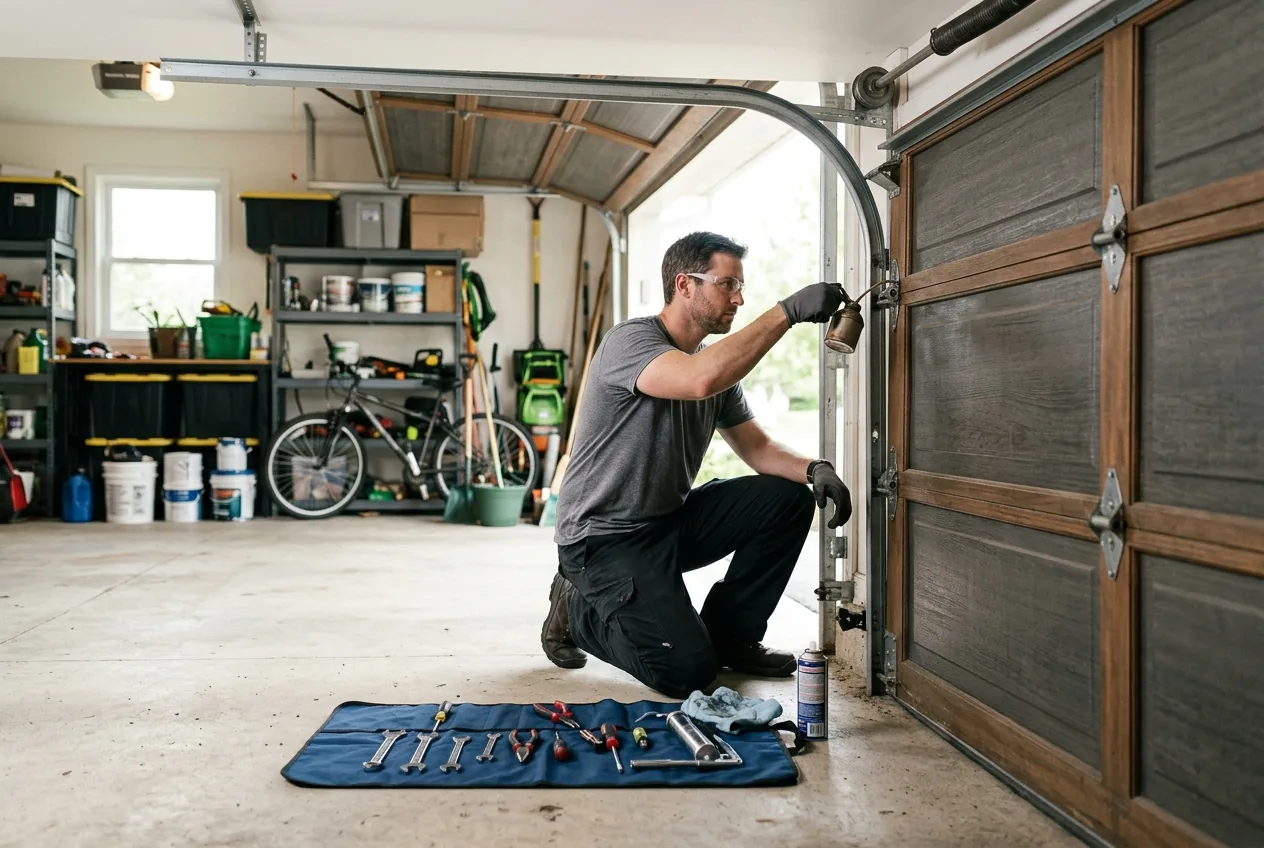
A large share of garage door noise complaints are solved with proper lubrication of rollers, hinges, and the torsion bearing — genuinely one of the easiest and cheapest fixes available. Use a silicone- or lithium-based garage-door-specific lubricant rather than a general all-purpose spray, and avoid the tracks themselves (lubricate the rollers, not the channel they ride in).
A single loud bang followed by the door becoming difficult or impossible to move is a broken spring, not a lubrication issue — stop using the door and treat it as needing repair. Similarly, grinding that's gotten progressively worse over weeks, rather than a constant low-level squeak, often points to a mechanical problem like a bent track or failing bearing rather than something a homeowner should try to fix with oil.
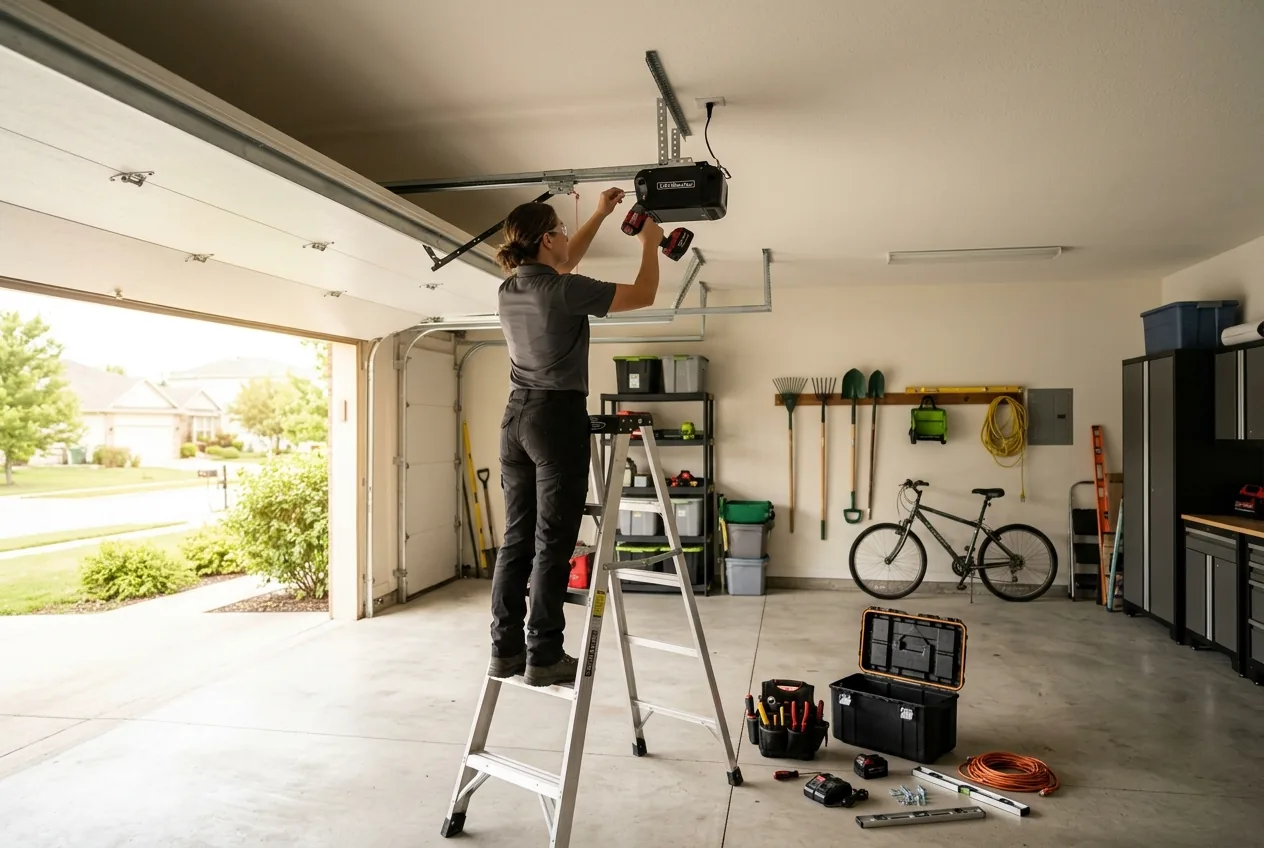
If the noise is specifically coming from the opener rail itself rather than the door and rollers, and you have an older chain-drive opener, some of that sound is simply how chain drives operate. If it's become a genuine household annoyance, upgrading to a belt-drive opener is a direct, permanent fix rather than something to keep managing with lubrication.
If lubrication doesn't meaningfully improve the noise within a cycle or two, or if the noise is accompanied by any visible wear, unevenness, or slower operation, it's worth having it properly inspected rather than guessing further — noise is often the earliest, cheapest-to-fix warning sign of a bigger problem down the road.
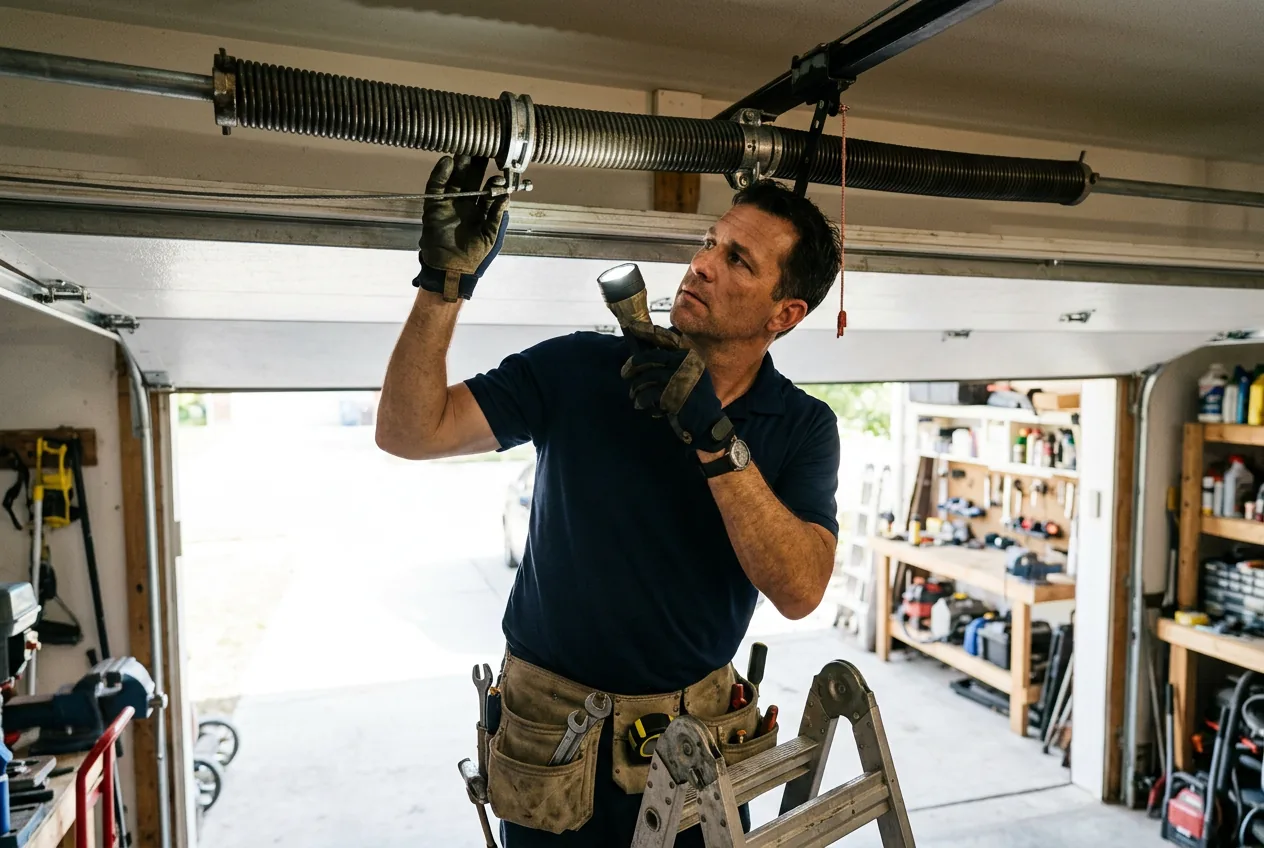
Not usually by itself, but noise is frequently an early warning sign of wear that, left unaddressed, can progress to a more serious and more expensive failure like a broken spring or bent track.
A silicone-based or lithium-based lubricant made specifically for garage doors. Avoid WD-40 as a long-term lubricant and never lubricate the springs unless the product is specifically rated for that use.
Only if the opener itself is the source of the noise (common with older chain-drive units). If the noise is coming from rollers, hinges, or the door structure, a new opener won't fix it — those parts need their own repair.
Tell us what's going on and we'll call you back to confirm a time. For anything urgent, call 317-509-9873 directly.
Call now for a straight answer and a real appointment window — or send us a quick request and we'll call you back.